PakAlumni Worldwide: The Global Social Network
CPEC is Transforming The Least Developed Parts of Pakistan
In a New York Times Op Ed titled "How Not to Engage With Pakistan", ex US Ambassador to Pakistan Richard G. Olson says "Its (CPEC's) magnitude and its transformation of parts of Pakistan dwarf anything the United States has ever undertaken". Olson goes on to warn the Trump Administration that "Without Pakistani cooperation, our (US) army in Afghanistan risks becoming a beached whale".
Among the parts of Pakistan being transformed by China Pakistan Economic Corridor (CPEC) are some of the least developed regions in Balochistan and Sindh, specifically Gwadar and Thar Desert. Here is more on these regions:
Gwadar Port City:
Gwadar is booming. It's being called the next Shenzhen by some and the next Hong Kong by others as an emerging new port city in the region to rival Dubai. Land prices in Gwadar are skyrocketing, according to media reports. Gwadar Airport air traffic growth of 73% was the fastest of all airports in Pakistan where overall air traffic grew by 23% last year, according to Anna Aero publication. A new international airport is now being built in Gwadar to handle soaring passenger and cargo traffic.
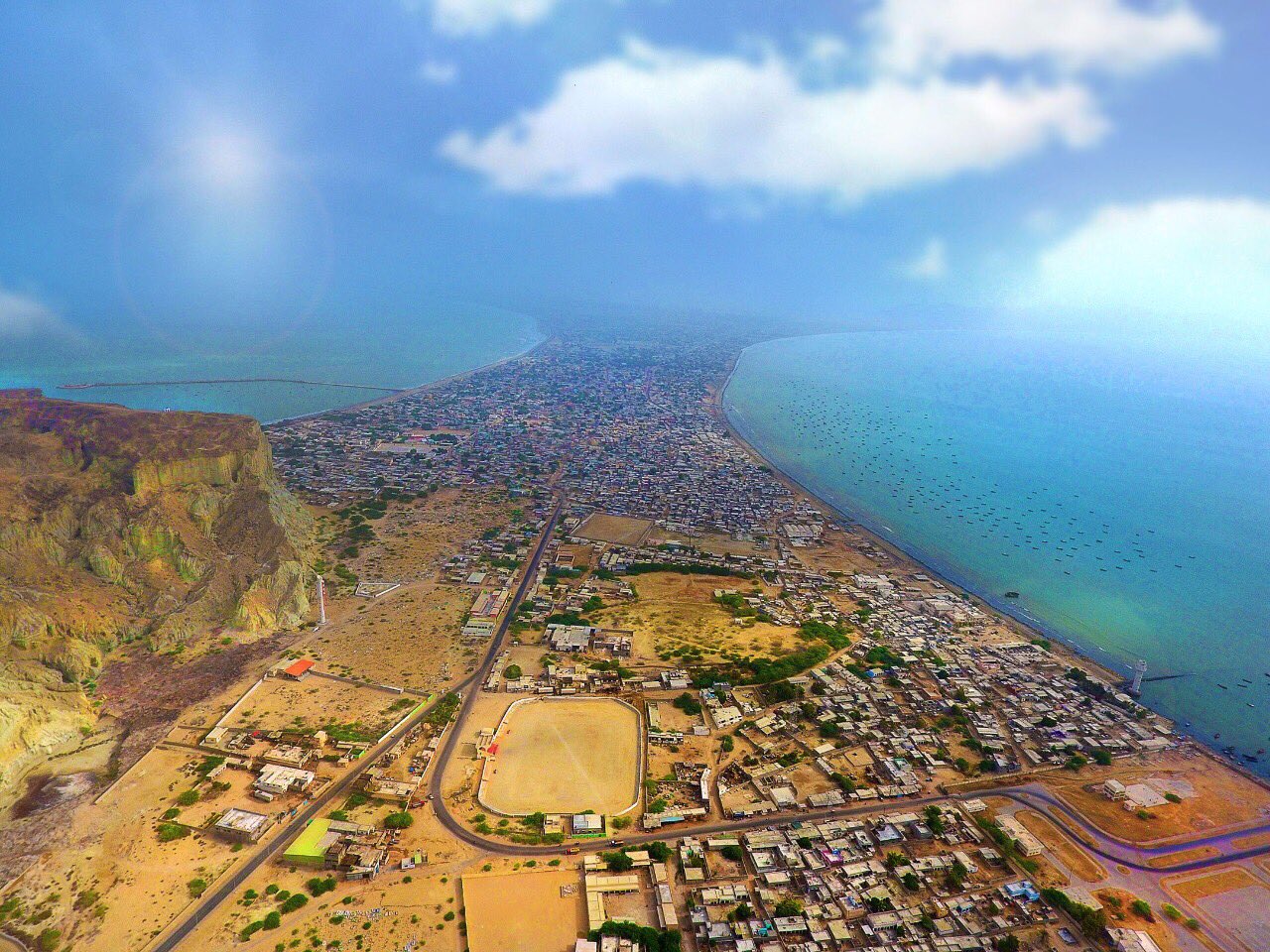
In addition to building a major seaport that will eventually handle 300-400 million tons of cargo in a year, China has built a school, sent doctors and pledged about $500 million in grants for an airport, hospital, college and badly-needed water supply infrastructure for Gwadar, according to Reuters.
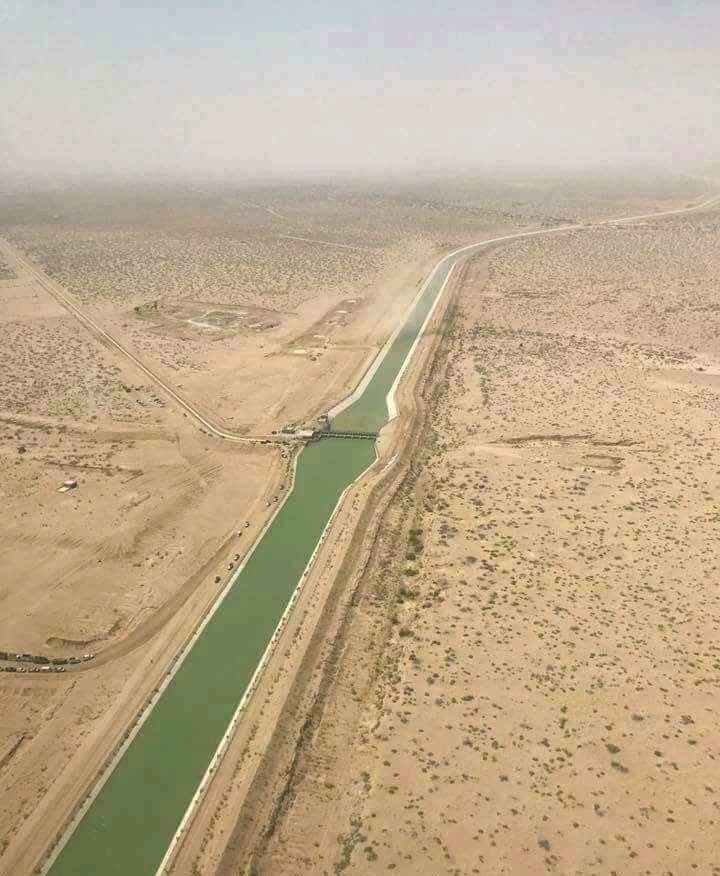 |
| 400 Km Long Kachhi Canal From Punjab to Balochistan |
The Chinese grants include $230 million for a new international airport in Gwadar, one of the largest such disbursements China has made abroad, according to researchers and Pakistani officials.
New development work in Gwadar is expected to create as many as 20,000 jobs for the local population.
|

Thar Desert:
Thar, one of the least developed regions of Pakistan, is seeing unprecedented development activity in energy and infrastructure projects. New roads, airports and buildings are being built along with coal mines and power plants as part of China-Pakistan Economic Corridor (CPEC). There are construction workers and machinery visible everywhere in the desert. Among the key beneficiaries of this boom are Thari Hindu women who are being employed by Sindh Engro Coal Mining Company (SECMC) as part of the plan to employ locals. Highlighted in recent news reports are two Hindu women in particular: Kiran Sadhwani, an engineer and Gulaban, a truck driver.
|
Kiran Sadhwani, a Thari Hindu Woman Engineer. Source: Express Tribune |

Thar Population:
The region has a population of 1.6 million. Most of the residents are cattle herders. Majority of them are Hindus. The area is home to 7 million cows, goats, sheep and camel. It provides more than half of the milk, meat and leather requirement of the province. Many residents live in poverty. They are vulnerable to recurring droughts. About a quarter of them live where the coal mines are being developed, according to a report in The Wire.
|

Some of them are now being employed in development projects. A recent report talked of an underground coal gasification pilot project near the town of Islamkot where "workers sourced from local communities rested their heads after long-hour shifts".
|

In the first phase, Sindh Engro Coal Mining Company (SECMC) is relocating 5 villages that are located in block II. SECMC is paying villagers for their homes and agricultural land.
SECMC’s chief executive officer, Shamsuddin Ahmed Shaikh, says his company "will construct model towns with all basic facilities including schools, healthcare, drinking water and filter plants and also allocate land for livestock grazing,” according to thethirdpole.net He says that the company is paying villagers above market prices for their land – Rs. 185,000 ($ 1,900) per acre.
Summary:
Ex US Ambassador Richard Olson is absolutely right in his assessment that "(CPEC's) magnitude and its transformation of parts of Pakistan dwarf anything the United States has ever undertaken". Olson goes on to warn the Trump Administration that "Without Pakistani cooperation, our (US) army in Afghanistan risks becoming a beached whale". The "magnitude" of CPEC and its "transformation" that Olson refers to is clearly visible in some of the least developed regions of Pakistan in Balochistan and Sindh provinces. Gwadar port city and Thar desert are humming with unprecedented development activity fueled by billions of dollars of funds allocated by China and Pakistan.
Related Links:
Riaz Haq
Pak-China Friendship Hospital brings lifesaving relief and hope in Pakistan's Gwadar-Xinhua
https://english.news.cn/20241104/759137d30165436e91c6f3416b0bf557/c...
Affan Faiq Zada, Medical Superintendent: "We have seen drastic improvements in the health outcomes here. This hospital has been a blessing for the local community." The Pak-China Friendship Hospital is making a significant impact in Pakistan's Gwadar. #CPEC
100-bed hospital
900 patients seen daily in outpatient clinic
State of the Art equipment including CT Scan, Digital X-rays, medical lab etc.
https://youtu.be/cj8Q0cKHhpY?si=nBl4tUnYzDkOZih_
Nov 5, 2024
Riaz Haq
Inspired by China's city of Shenzhen, the master plan of Gwadar smart port city envisions the development of an industrial base that will not only create a lot of employment opportunities but also promote tourism in the area.
https://en.ndrc.gov.cn/news/mediarusources/202211/t20221103_1340804...
ISLAMABAD, Nov. 1 (Xinhua) -- Pakistan's southwestern Gwadar district will be a hub of trade and investment in the future thanks to the China-Pakistan Economic Corridor (CPEC), Director-General of Gwadar Development Authority (GDA) Mujeeb Ur Rehman Qambrani said on Monday.
Addressing a special session on "Gwadar and the Road to Sustainable Development" organized by the Islamabad-based think tank Sustainable Development Policy Institute (SDPI), Qambrani said that the master plan of Gwadar smart port city envisions the development of an industrial base which will not only create a lot of employment opportunities but also promote tourism in the area.
The master plan is inspired by China's city of Shenzhen and the GDA is vigorously executing it for timely delivery, he said, adding that the master plan was finalized after collaboration between Pakistani, Chinese, and other stakeholders.
He said that Gwadar international airport being constructed with cooperation from China will be functional in 2023 and will enhance the development process of the district.
Hassan Daud Butt, senior advisor at the China Study Center of the think-tank, said that Pakistan-China cooperation on the CPEC and combating COVID-19 has transformed Pakistan's technological pace.
"China is building an enabling environment for business and economic opportunities in our country. Therefore, we must prepare ourselves to capture the opportunity," he added.
Also speaking at the event, Sajid Amin, deputy executive director at the SDPI, said that the development sector and civil society organizations can play a pivotal role as knowledge partners and in the advocacy of the immense socio-economic potential of Gwadar.
Nov 16, 2024
Riaz Haq
USF Connects 16.2m People, Deploys 10,400km OFC in Five Years.
The projects expanded broadband access across thousands of underserved areas. Fibre deployment also connected 947 previously unserved
https://www.techjuice.pk/usf-connects-16-2m-people-deploys-10400km-...
The Universal Service Fund (USF) has expanded voice and broadband access to more than 16.2 million people. The projects covered over 9,400 underserved and unserved mauzas during the last five fiscal years.
The figures were shared by Minister for Information Technology and Telecommunication Shaza Fatima Khawaja. She provided the details in a written reply to the National Assembly.
During FY2022-26, USF projects delivered voice and broadband data services across more than 9,400 mauzas. The programme also helped bring broadband to areas where telecom operators lacked a strong business case.
USF also expanded coverage along more than 1,000 kilometres of unserved roads. These included sections of national highways and motorways. The projects also covered eight tourist destinations and around 50 kilometres of access routes.
The fund deployed more than 10,400 kilometres of optic fibre cable (OFC) during the same five-year period. This work connected 947 unserved tehsil headquarters, union councils and towns.
Since its launch, USF has reached more than 38.4 million people across over 22,100 mauzas. It has also covered more than 2,500 kilometres of previously unserved road segments.
The fund has connected eight tourist destinations and about 50 kilometres of access routes. Its total OFC deployment has also crossed 18,300 kilometres since inception.
USF was established under Section 33(A)(1) of the Pakistan Telecommunication (Re-organization) Act, 1996. Its main goal is to extend telecom services to rural, remote and underserved communities.
The programme initially focused on voice and basic data services through 2G networks. It later expanded to high-speed broadband through 3G and 4G networks.
The government said better connectivity is also supporting education, healthcare and emergency services. It is helping improve financial inclusion, e-governance and access to economic opportunities.
The ministry said USF remains important in areas where commercial telecom deployment is difficult. It will continue targeting unserved and underserved communities through broadband and fibre projects.
17 hours ago